
History
Introduction
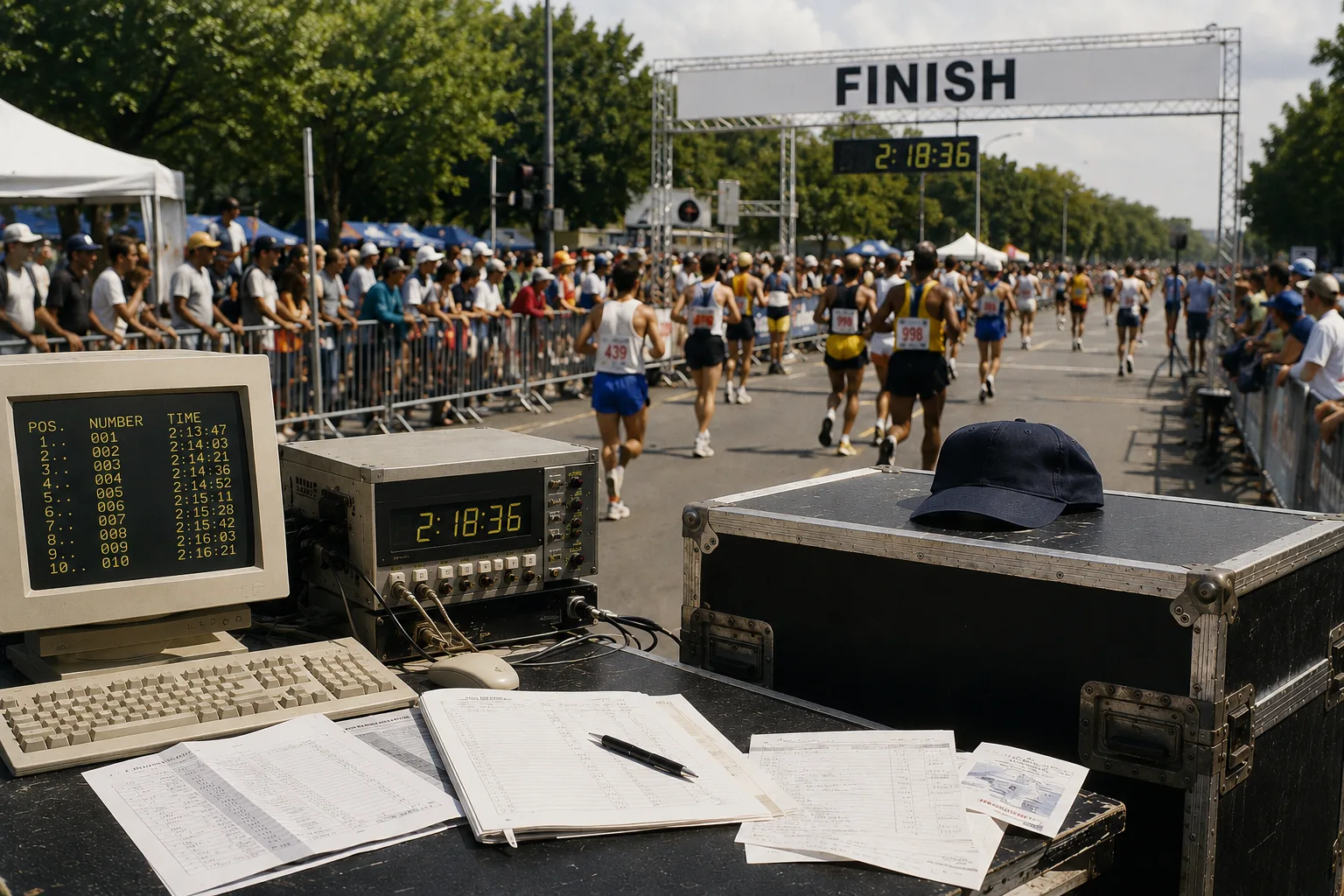
Winning Time was born with a clear goal: to ensure precision and reliability in the timing of sports events.
Over time, experience in the field has led to a natural evolution of our role, expanding skills and responsibilities well beyond timing.
1999
The beginning, with a wider gaze
Winning Time is founded as a pioneer in sports timing, in a context where precision and reliability represented the true distinctive element. The same year, the team confronted the international stage, contributing to the timing of the road events at the 1999 World Athletics Championships in Seville. An experience that marked the opening toward global scenarios.
2000s
From vision to scale
Building on the first international experiences, activities expanded across different sports disciplines, consolidating operational skills and management capacity. During these years, Winning Time also operated at large-scale international events such as the Cape Argus Pick ’n Pay Cycle Tour, strengthening experience in complex, high-participation contexts.
2010s
Growing in complexity
Working on increasingly complex events, our capacity to handle not only timing but also the organisational and operational components of events grew. In parallel, activities extended to other disciplines such as golf, broadening the approach to different organisational models.
Digital evolution — Data as infrastructure
As the importance of data grew, Winning Time developed expertise in managing, distributing and valorising results, integrating technology and digital platforms. Data became an integral part of the event experience.
2023
New languages, new rhythms
From 2023, Winning Time has been involved in football projects, collaborating with top-tier organisations such as Major League Soccer and Serie A. A context that brings continuous operations, integration with digital systems and real-time data flow management.
Today
A complete system
Today Winning Time is a partner able to fully support sports events, combining timing precision, data management and operational coordination. Its activity extends to different disciplines and contexts, including projects in tennis and collaborations linked to the Milano Cortina 2026 Winter Olympic Games, among the most complex organisational environments worldwide.
From timing pioneers to a complete operational partner for sports events.